The Perfect Posture For Meditation

Posture is an important part of every meditation as it sets the intention for your meditation practice and assists your body in learning contextual cues in order to understand that it is time to meditate. Forming the habit of moving into your meditation posture also helps you to transition into your practice more easily.
Your meditation posture should be comfortable to sustain for a short period of time whilst also allowing you to remain alert; seated postures such as on a yoga mat or chair are preferable to laying down as tiredness and sleep are induced more easily which removes mental clarity.
Whilst posture is a very important part of meditation, it’s ok if it isn’t absolutely perfect as you shouldn’t preoccupy your mind or fret about making adjustments that will distract you from your purpose. Instead, try to be mindful of any movements and adjustments that you make and steer yourself away from restlessness and agitation.
Every individual is different and what is physically comfortable for one person may be rather uncomfortable for another, so it’s really a case of finding a meditation posture that works well for you.
Ideal Alignment For Energy Flow
The back should be straight, yet not forced to create tension, to allow energy to flow freely up the spine. The shoulders should be relaxed and rolled back and down slightly to prevent you from slouching. The chin should tilt downwards ever so slightly as you imagine a string in the top of the head pulling you upwards to straighten the spine as you relax the muscles of the neck and jaw. Placing your hands on your knees or in the lap also helps to prevent tension in the arms and shoulders.
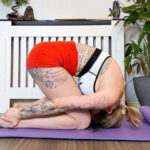
You can use a variety of postures for meditation for which it is worth exploring what works best for you. You can stand in Mountain Pose with hands clasped in front or behind of you, sit on a chair with your hands in your lap, kneel with your hands on thighs, sit with your legs crossed in Easy Pose, sit with heels aligned with the spine in Perfect Pose, or sit with ankles crossing the hip crease in Lotus Pose on a yoga mat. Being seated on a cushion or rolling blankets beneath the knees helps to support tight hips and make any seated posture more comfortable and sustainable.
If you are seated on a chair you must ensure that you are sitting upright and not making contact with the upper back of the chair or slouching unless you require the additional support. Feet should be flat on the floor at all times and hands resting on the legs or in the lap.
If laying down to meditate is your only option you can use a yoga block, cushion or folded blanket beneath the head and knees which can be slightly bent with feet flat on the floor. Heels can also be angled slightly outward to prevent the knees from dropping open.
In all meditation postures the face muscles should be relaxed with unclenched teeth and the tip of the tongue resting on the roof of the mouth just behind the upper teeth, as this connects the two main energy meridians in the body which travel up the spine.
Should you feel any pain or discomfort throughout your meditation please stop immediately.
Namaste x

You may also like


Anxiety rings: A discreet way to manage your anxiety levels

The Healing & Metaphysical Properties Of Red Snowflake Obsidian